Upcoming Event: Oden Institute Seminar
What Does Safety Look Like for Learned Robot Policies?
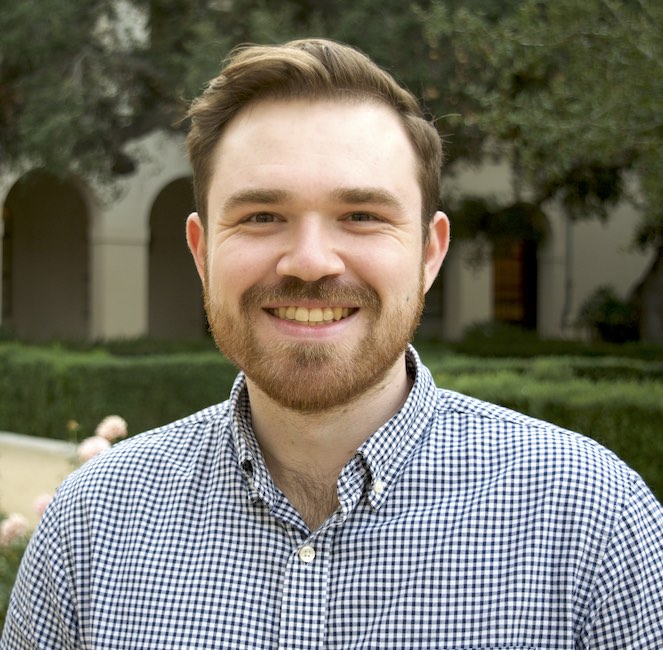
Preston Culbertson, Assistant Professor, Cornell University
3:30 – 5PM
Thursday Nov 5, 2026
POB 6.304
Abstract
Keeping robots safe has traditionally required three things: a specification of what safety means, dynamics accurate enough to predict and prevent bad outcomes, and an estimate of the system's state. For learned policies, none of these are available from first principles — they must be learned. This talk presents progress on two fronts. When accurate dynamics are difficult to obtain, we show that composing control barrier functions with learned stochastic models can recover risk-sensitive safety guarantees in locomotion and contact-rich manipulation. For state estimation, modern visuomotor policies offer an unexpected resource. Because they are built on powerful pretrained vision-language models, tools from mechanistic interpretability can be repurposed to read their internal representations. We find that a VLA's activations encode its own progress toward task completion, a signal that can serve as a lightweight, label-free failure detector. I will close with a discussion of some open problems in robot safety: how to specify safety for open-ended tasks, and how to actively steer learned behavior when failure is detected.
Biography
Preston Culbertson is an Assistant Professor of Computer Science at Cornell University. Prior to joining Cornell, he was a research scientist at the Robotics and AI Institute and a postdoctoral scholar at the California Institute of Technology. He received his PhD and MS from Stanford University and his BS from the Georgia Institute of Technology, all in mechanical engineering. His research draws on optimization, control theory, and machine learning to develop robotic systems that remain reliable when models, sensing, or hardware are imperfect.
Event information
Thursday Nov 5, 2026